
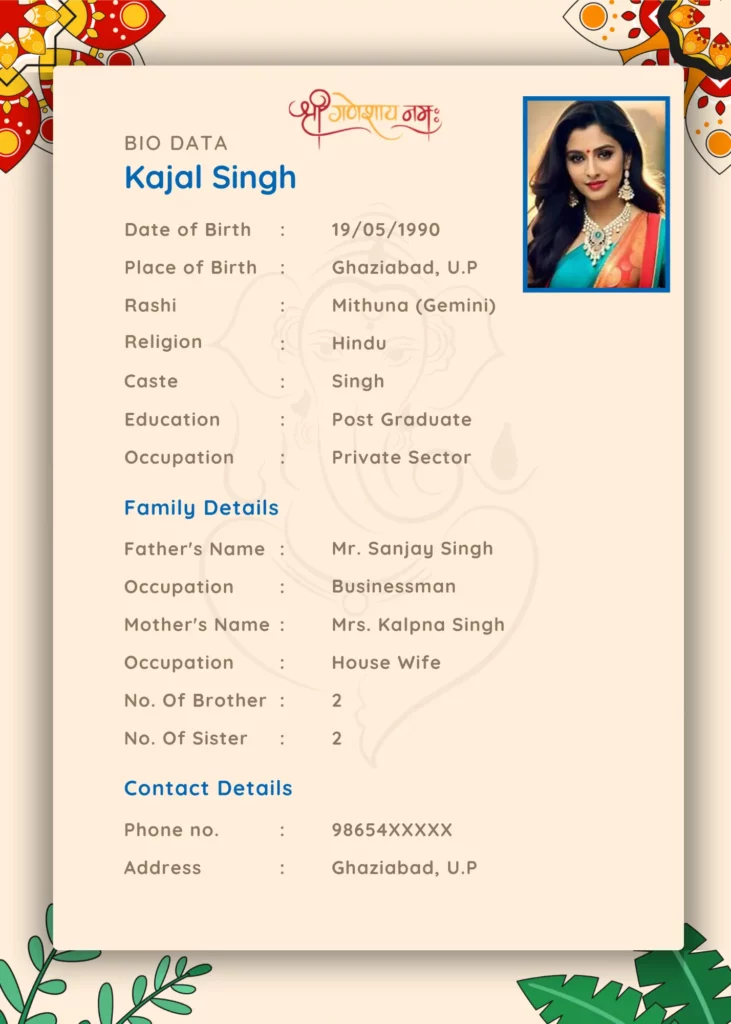
Marriage biodata has become a crucial element in modern matchmaking. Whether you are connecting through family networks, matrimonial websites, or community-based platforms, a short and simple marriage biodata can save time and increase the chances of finding a compatible life partner quickly.
The key is to create a format that is neat, easy to read, and includes only the most essential details that help potential families make quick decisions.
What is a Marriage Biodata?
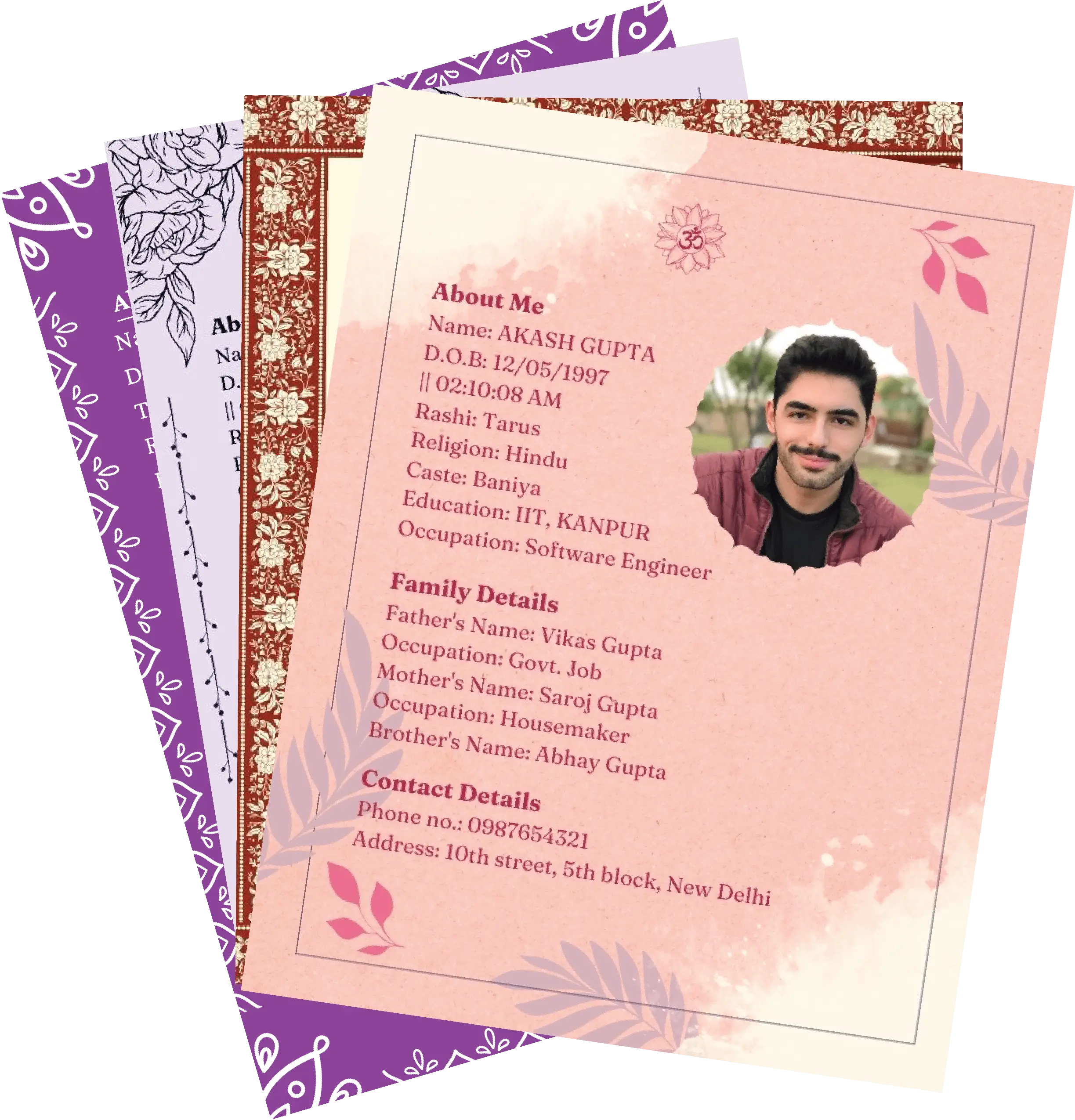
A marriage biodata is a structured document that highlights important personal, family, and professional details of an individual. Unlike a resume, which focuses on career, a biodata is intended for matchmaking purposes.
Traditionally, families relied on word-of-mouth introductions, but today, platforms require a formal presentation of details. A concise marriage biodata acts as the first impression, helping both families assess compatibility in terms of background, education, lifestyle, and preferences.
Why a Short and Simple Biodata Works Best?
A short and simple marriage biodata tailored for your community—whether Hindu, Muslim, Jain, Buddhist, Punjabi, or Divorcee—can increase the chances of quick and positive proposals. By presenting information in a neat, structured format, you ensure clarity and trustworthiness.
Many people mistakenly believe that a long biodata will impress potential matches. However, lengthy documents often make the reader lose interest. Instead, a short and simple marriage biodata is more effective because:
- Quick readability – Busy families can scan through details in minutes.
- Focused information – Only the most relevant details are included.
- Professional presentation – Neat formats leave a lasting impression.
- Fewer chances of rejection – No unnecessary details that may create confusion.
In today’s fast-paced world, clarity and brevity are powerful tools in finding a suitable match.
Essential Components of a Short Marriage Biodata
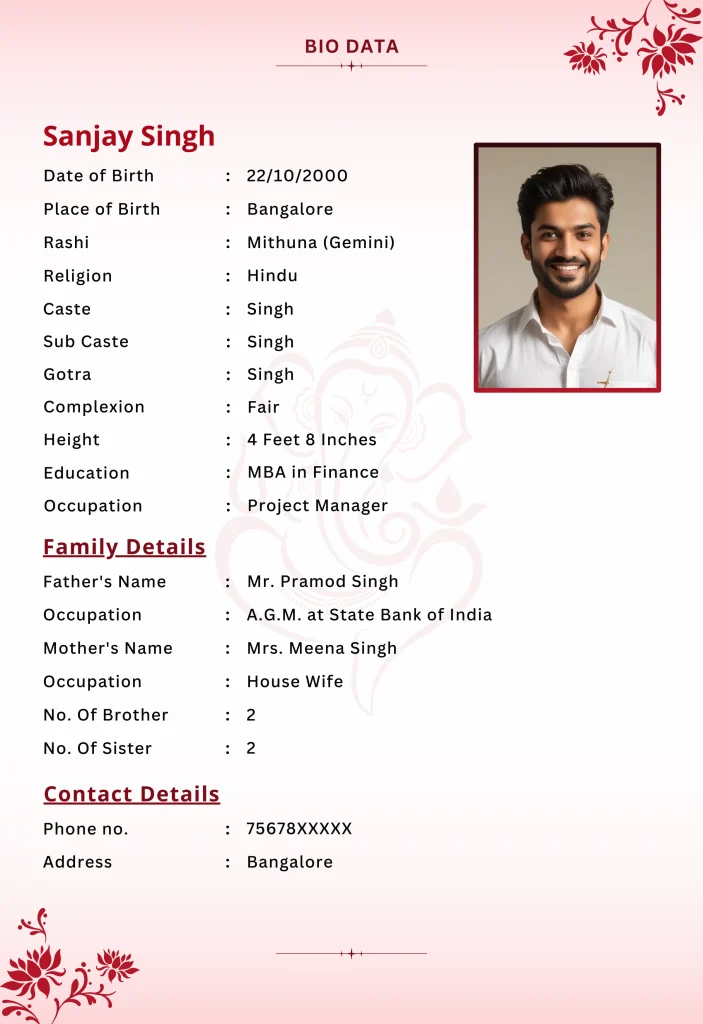
To create an impactful biodata, focus on the essentials. Below are the most important elements every biodata must have:
Basic Personal Information
Include:
- Full Name
- Date of Birth / Age
- Gender
- Height & Weight (optional but commonly used)
- Marital Status (never married, divorced, widowed)
Contact Information
Keep it minimal and professional:
- Mobile Number
- Email Address
- City & State of Residence
Educational Background
Clearly mention the highest qualification. For example:
- Bachelor of Commerce from XYZ University
- MBA in Marketing from ABC Institute
Professional Information
Briefly highlight career details:
- Current job title and company name
- Business details if self-employed
- Annual income (optional depending on cultural norms)
Family Background
This section helps assess social compatibility. Include:
- Father’s Occupation
- Mother’s Occupation
- Siblings and their professions
Lifestyle & Hobbies
Mentioning hobbies makes the biodata more personal. For instance:
- Reading, Traveling, Cooking, Photography
Partner Preferences
Adding a small section about expectations is helpful:
- Preferred age group
- Education or profession expectations
- Location preferences
Community & Lifestyle-Specific Marriage Biodata Formats
Every community has unique traditions, expectations, and cultural details that families want to see in a biodata. While the basic structure of a marriage biodata remains the same, customizing it for your background makes it more relatable and acceptable to potential families.
A structured table makes the biodata easy to read. Here’s a sample format:
Rohit Sharma
Mumbai, Maharashtra
- Date of Birth: 15 August 1994
- Age: 29 Years
- Height / Weight: 5’10’’ / 72 Kg
- Gender: Male
- Religion/Caste: Hindu Brahmin
- Gotra: Bhardwaj
- Marital Status: Never Married
- Education: MBA in Finance, XYZ University
- Occupation: Senior Analyst, ABC Pvt. Ltd.
- Family: Father: Businessman, Mother: Homemaker
- Hobbies: Reading, Music, Fitness
- Contact: +91-XXXXXXXXXX / email@example.com
This type of format is short, simple, and visually appealing, making it ideal for quick proposals.
Tips for Designing a Marriage Biodata
Creating a biodata is not just about listing details. Presentation matters too.
Keep the Layout Clean
- Avoid cluttered text. Use tables, bullet points, and bold headings to make it easy for readers.
Use a Professional Photograph
- Adding a high-resolution passport-size photo creates authenticity. It should be recent and formal.
Stick to Neutral Colours
- When designing a biodata in MS Word or online tools, avoid loud colours. Use professional fonts like Arial or Times New Roman.
Keep it One Page
- The biodata should not exceed a single page. If additional details are required, they can be shared later.
Make it Editable
- Save the document in PDF format so you can update details easily.
Common Mistakes to Avoid
- While making a biodata, avoid the following errors:
- Overloading with unnecessary details (such as extended family history).
- Using casual photos instead of professional ones.
- Sharing sensitive information like complete address too early.
- Over-exaggeration of income, job, or lifestyle.
Keeping the biodata simple ensures trust and transparency.
Conclusion
A short and simple marriage biodata for quick proposals is not just about filling in details; it’s about creating a professional, trustworthy, and appealing presentation. By including only the most relevant information—personal, educational, professional, and family background—you can make the process faster and more effective.
Whether you use ready-made templates from online biodata creators or design your own, always remember: simplicity attracts attention, and clarity builds trust.
For anyone seeking quick proposals, a well-structured marriage biodata can become the bridge between two families, turning an introduction into a lifelong relationship.