Regional Variations in Marriage Biodata: North vs South India Styles

Marriage biodata has been a crucial part of the Indian matchmaking tradition for decades. While matrimonial websites and apps are growing, the marriage biodata (a structured document highlighting personal, family, and lifestyle details) continues to play a big role—especially in arranged marriages.
Interestingly, marriage biodata isn’t the same across India. There are regional variations in how families prepare and present biodata. The most prominent differences can be seen between North India and South India.
Let’s explore these differences in detail.
Personal Details
North India
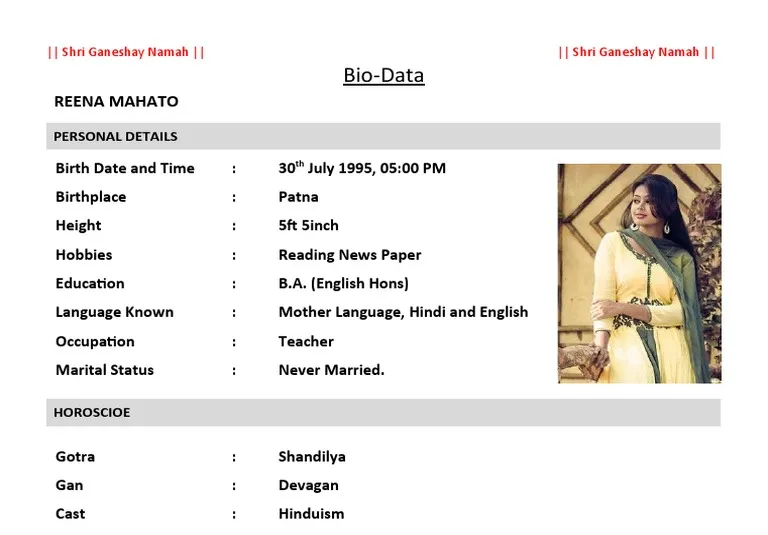
1. Focus on name, age, height, weight, education, and profession.
2. Horoscope is optional—many modern families skip it.
3. Sometimes includes hobbies/interests to give a “complete personality” view.
South India
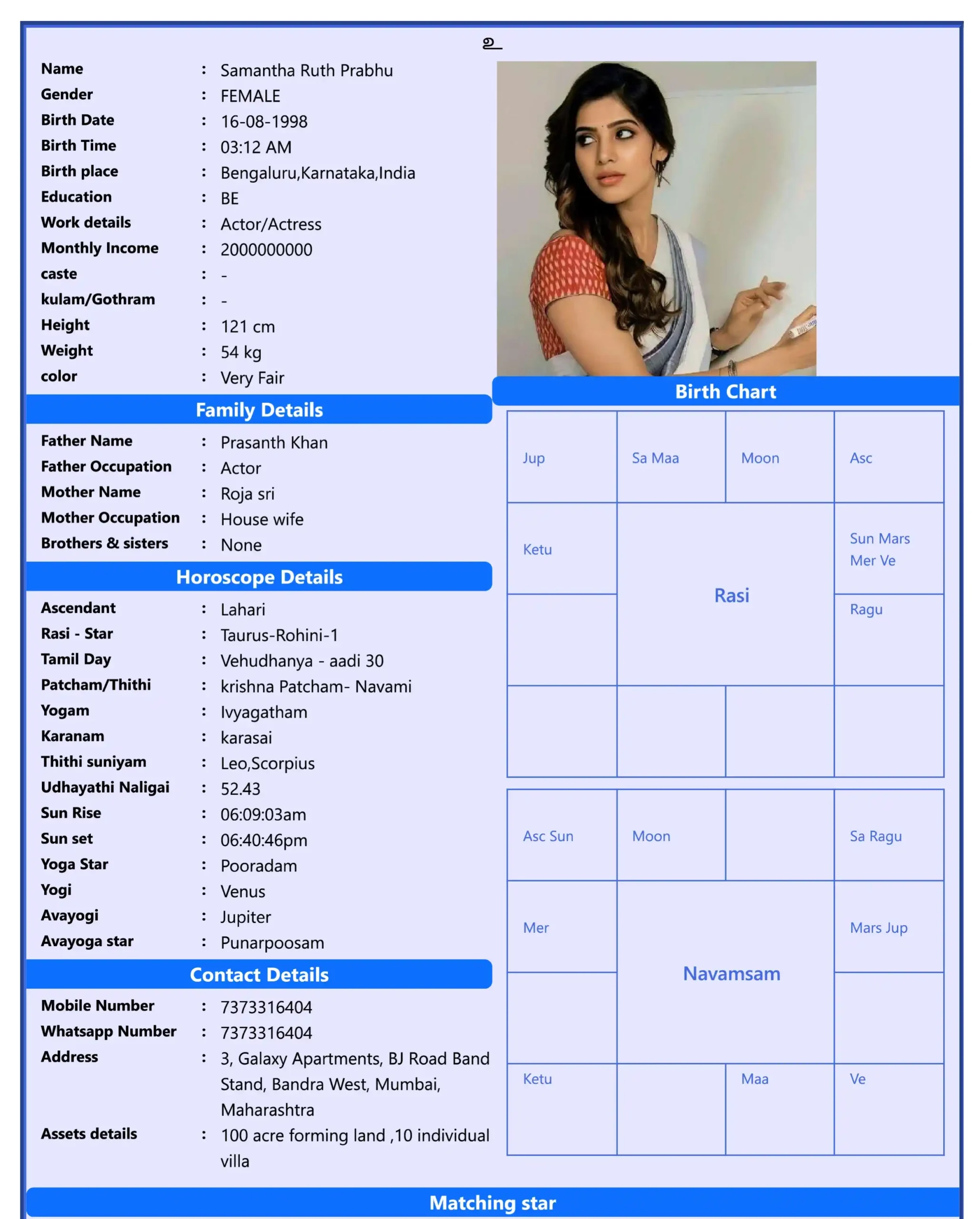
1. Astrological details (horoscope, nakshatra, rashi) are considered very important.
2. Exact birth details (time, place, date) are almost always mentioned.
3. Strong emphasis on cultural and religious background.
Family Information
North India
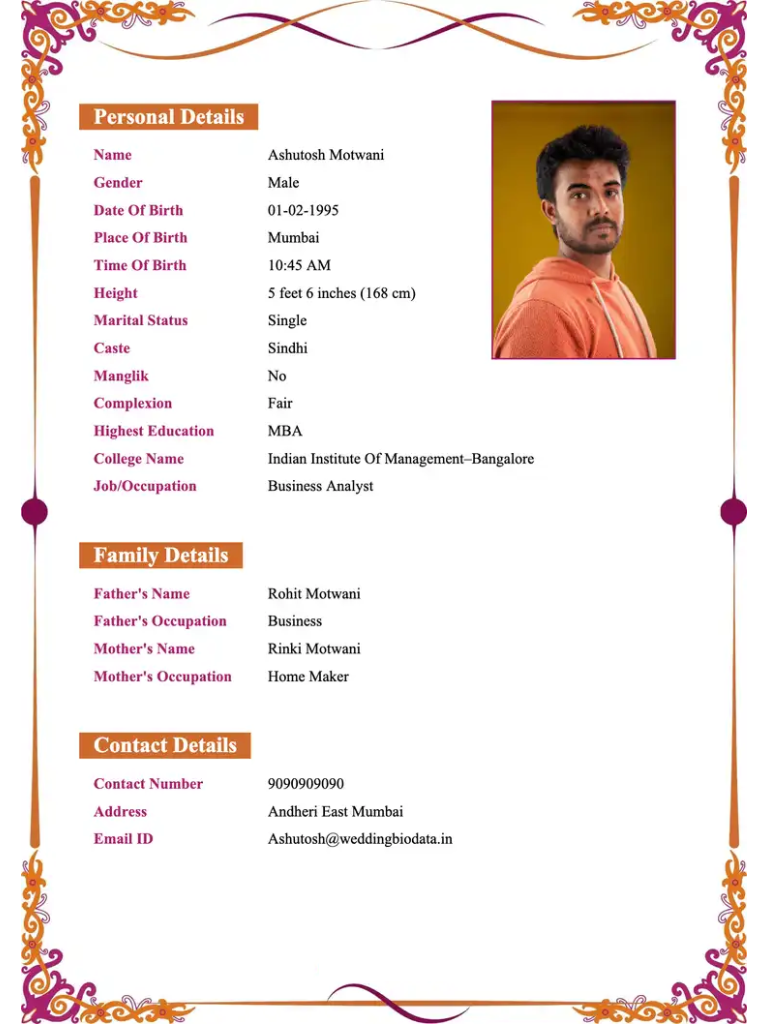
1. Family details include father’s name, occupation, mother’s name, siblings, and marital status of siblings.
2. Extended family details are sometimes added but not always mandatory.
South India
1. More elaborate family section.
2. Includes ancestral origin (native place, family lineage) along with details of immediate and extended family.
3. Strong emphasis on community and caste background.
Educational & Professional Details
North India
1. Short and straightforward: “MBA from IIM Bangalore, working as Marketing Manager in Delhi.”
2. Career growth and financial stability are highlighted.
South India
1. Education is described in more detail, often including school, college, degree, and special achievements.
2. IT and engineering backgrounds are often highlighted due to regional career trends.
Horoscope & Astrology
North India
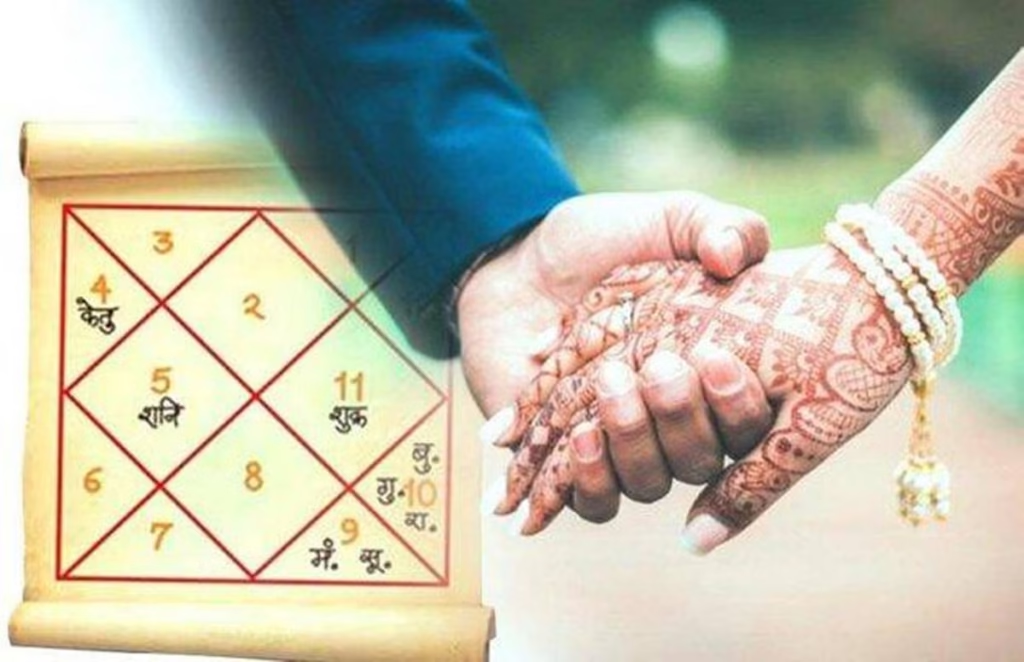
1. Horoscope may be attached, but not always mandatory.
2. Some families only ask for it after initial biodata exchange.
South India
1. Horoscope is almost always an integral part of the biodata.
2. Matchmaking starts with horoscope matching (Kundali / Jathakam) before moving to personal interactions.
Language & Tone
North India
1. Usually written in English or Hindi.
2. More focused on modern, professional presentation.
South India
1. Often written in English, Tamil, Telugu, Kannada, or Malayalam, depending on community.
2. More formal and traditional in tone.
Photographs
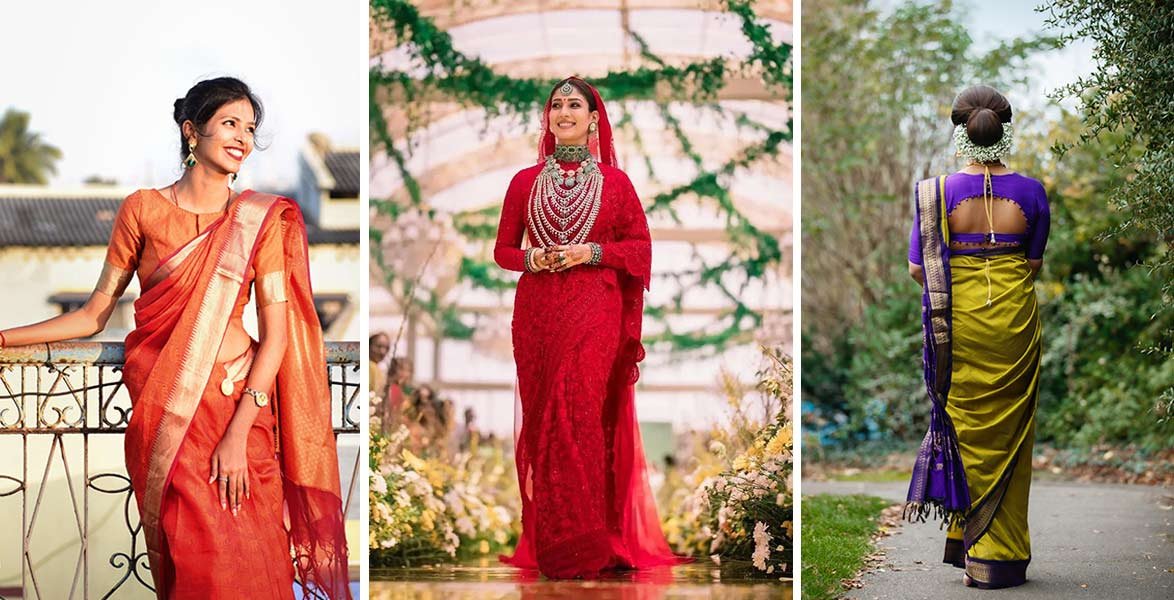
North India
1. Biodata typically includes multiple photos (formal, casual, and sometimes family pictures).
2. More emphasis on presentation and style.
South India
1. Usually one or two passport-size photos, often formal and simple.
2. Focus remains more on the biodata content than visuals.
Design & Format
North India
1. Modern, stylish templates are common (colorful borders, creative layouts).
2. Biodata often looks like a resume.
South India
1. Traditional formats dominate.
2. Clean, minimal designs with a strong focus on astrological charts.
Conclusion
Both North Indian and South Indian marriage biodatas serve the same purpose—helping families find a compatible match—but the way they are prepared reflects regional cultural values, traditions, and priorities.
- • North Indian biodatas are more professional, concise, and modern.
- • South Indian biodatas are more traditional, astrology-focused, and family-centric.
At the end of the day, a marriage biodata is not just a document—it’s a reflection of heritage, culture, and family values.
If you are creating your own marriage biodata, make sure it represents your background and your family’s expectations while also keeping it clear, simple, and visually appealing.
North Indian biodatas are usually shorter, modern, and resume-like, focusing on education, profession, and family. South Indian biodatas are often more detailed and traditional, with a strong emphasis on astrology and ancestral roots.
In South India, horoscope matching (Jathakam / Kundali) is considered a crucial step in arranged marriages. Families often check compatibility through astrology before proceeding with meetings. In North India, astrology is used but not always mandatory.
Yes, but usually in a brief manner. In South India, however, community, sub-caste, and lineage details are given more importance and often elaborated in the biodata.
- North India – Hindi and English.
- South India – English, Tamil, Telugu, Kannada, or Malayalam, depending on the community.
Yes. North Indian biodatas often include multiple photos (formal and casual), while South Indian biodatas usually stick to one or two formal passport-size photos.
Absolutely. Many modern families prefer a balanced format—professional and modern like North India, but with optional astrology and ancestral details for South Indian traditions.